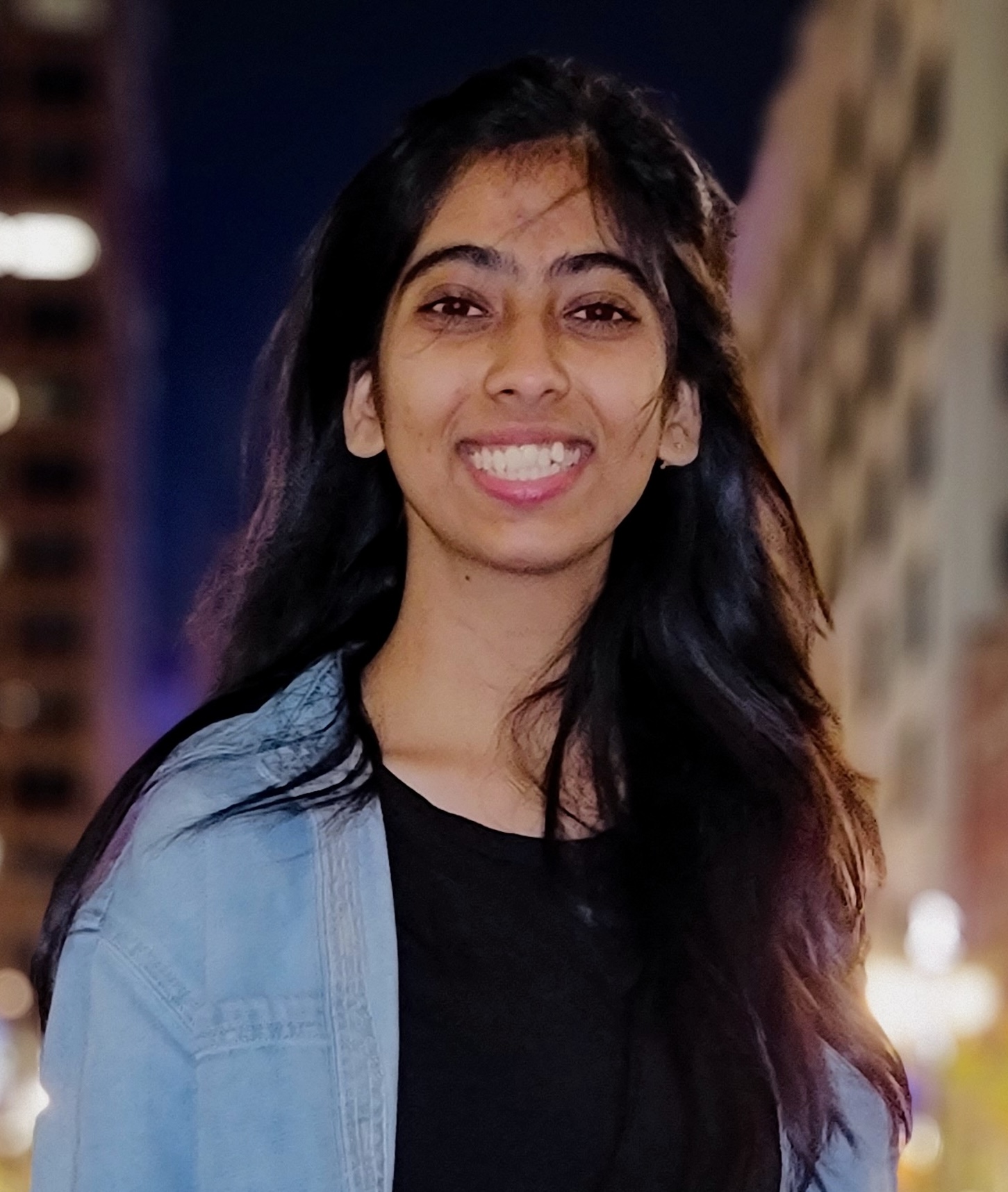
Hello there! Welcome to my corner of the WWW!
Meghna Roy Chowdhury
|
Download CV“Arise, Awake & Stop Not, till your goal is reached!”
— Swami Vivekananda
Scroll to explore
Download CV“Arise, Awake & Stop Not, till your goal is reached!”
— Swami Vivekananda
The short version. The long version is the rest of this page.
I’m Meghna, a PhD candidate in ECE at Purdue University, working in SPARC Lab.
My research focuses on making wearables smarter without making them power-hungry. I work across the wearable system, from sensing ECG, EEG, and EMG signals to low-power data transfer using human-body communication (HBC) and efficient AI at the edge.
I am also interested in using AI to design and optimize circuits. Across these areas, my goal is to build solutions that work within real hardware constraints such as limited power, memory, and computation. I enjoy working across hardware and software, whether I am measuring signals, processing noisy data, developing ML models, or testing a complete wearable prototype.
I use AI for healthcare and circuit design, with a focus on low-power wearables, HBC, biopotential sensing, and on-device intelligence. I like building systems where algorithms meet real hardware.
Research and industry, 2018 to now. Click on each to know more!

Applied ML for healthcare, circuits, and wearable systems, along with low-power hardware and signal processing.
Previous Stops Along the Way





The tools I reach for most.
A few things I've built and published. Hit “Learn More” for the deep dive!
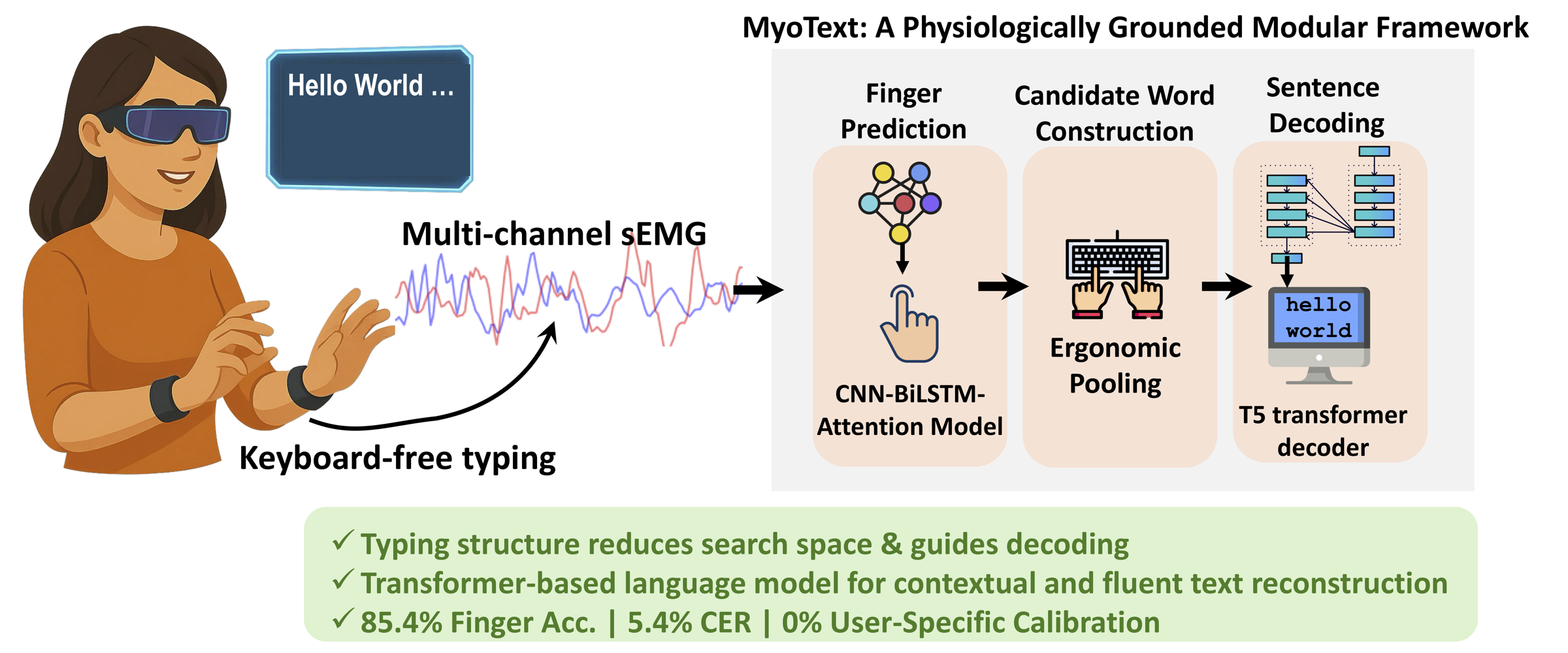
A hierarchical sEMG-to-text framework: it predicts which finger pressed each key, constrains the letters with typing ergonomics, and decodes the sentence with a T5 transformer, with no per-user calibration.
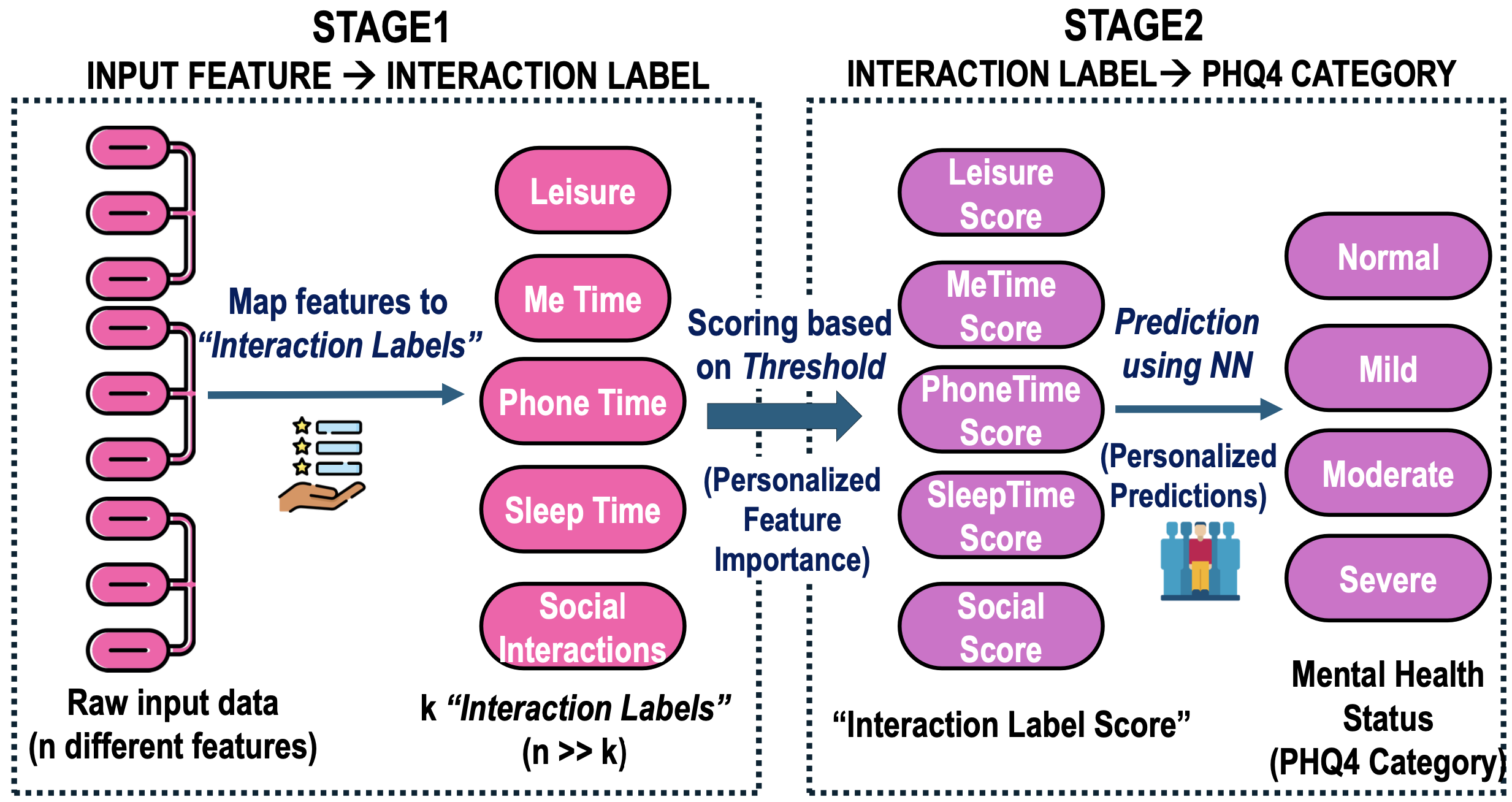
Predicting college student mental health using interpretable AI. Achieved 91% prediction accuracy (vs 70% baseline).
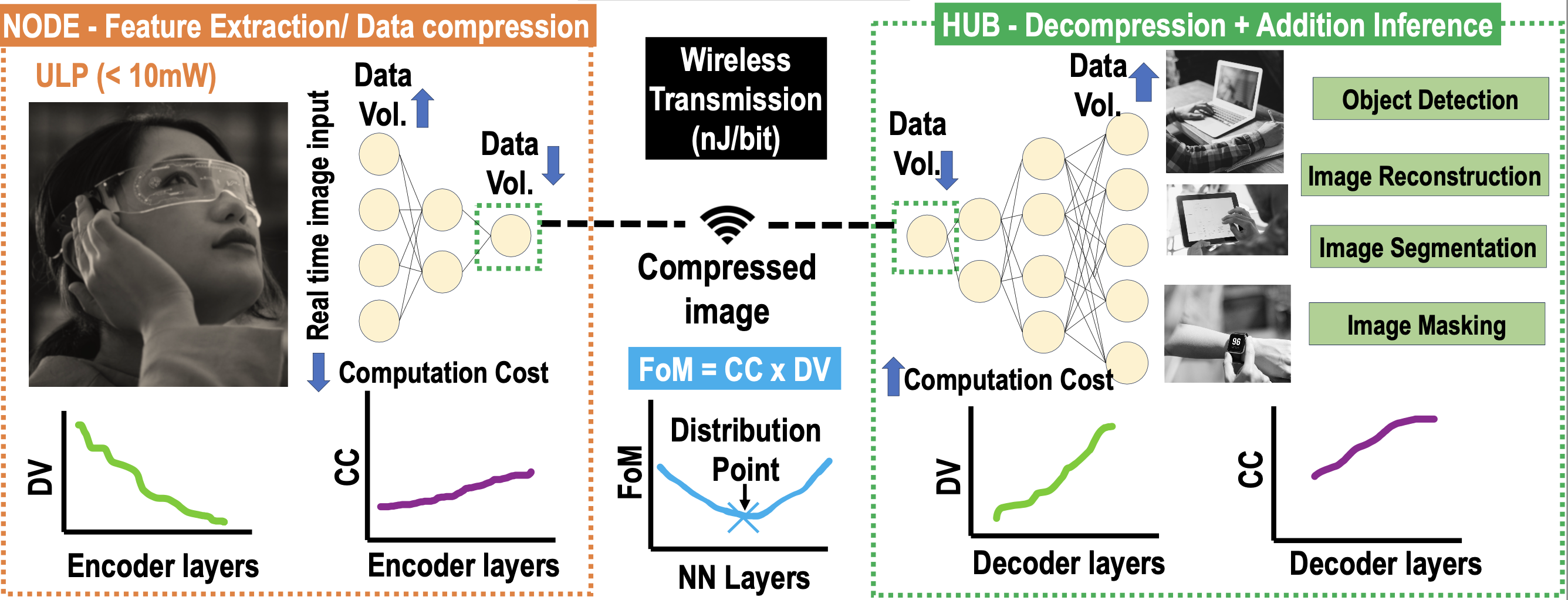
Splitting neural nets between a wearable and a nearby hub, for roughly 1000x the energy efficiency of a GPU.
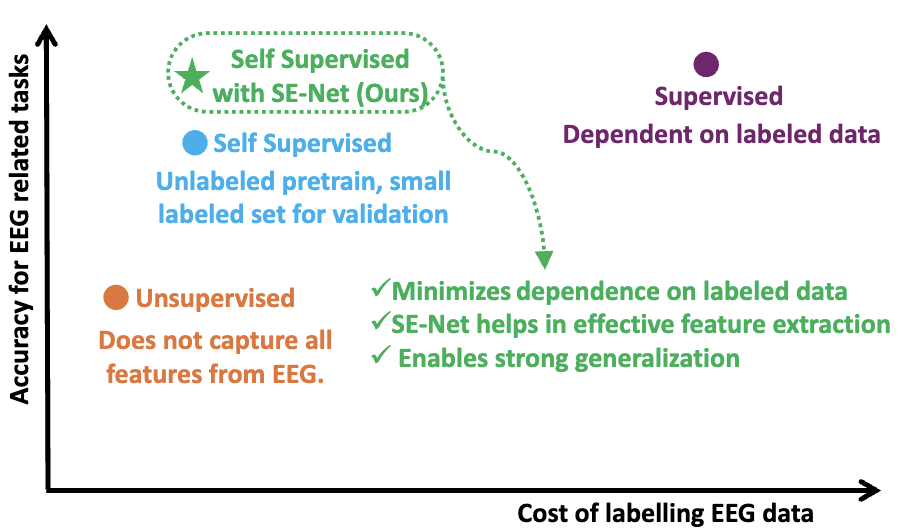
Strong EEG accuracy with far less labeled data, using self-supervised learning and squeeze-and-excitation networks.
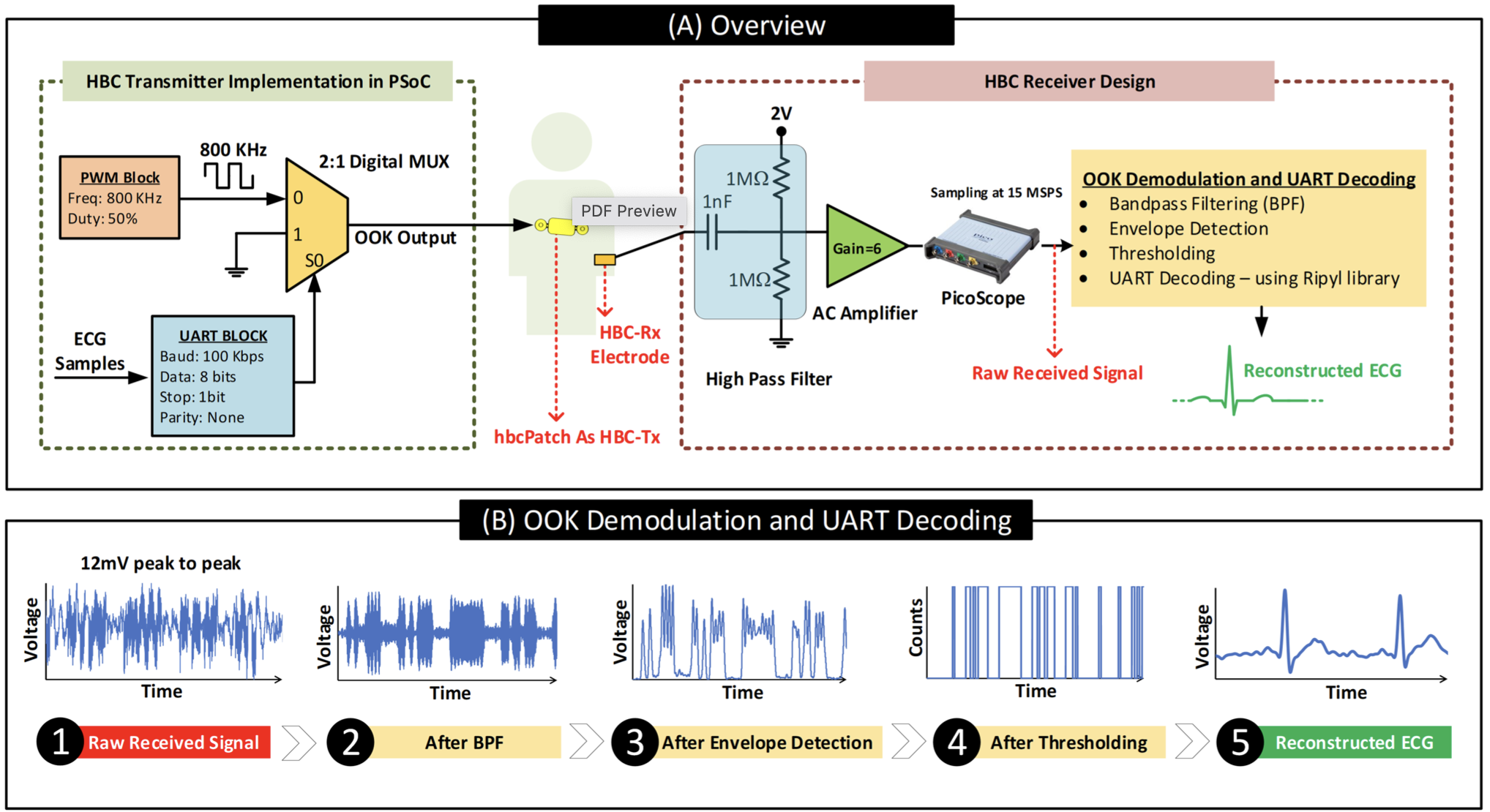
Ultra-low power (20µW) flexible ECG patch using body heat and Human Body Communication.
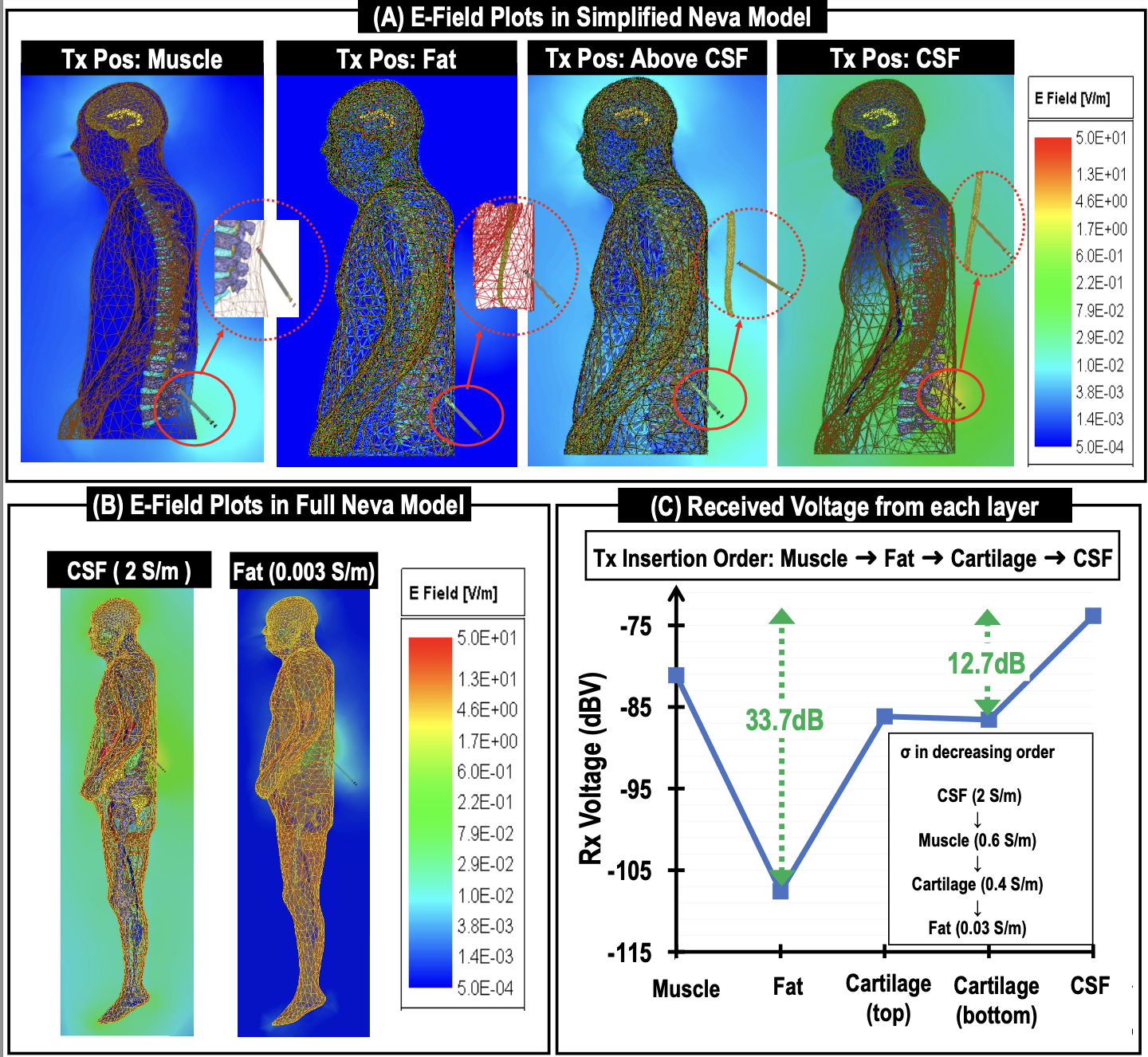
Novel electronic system using electric fields for accurate Intrathecal Drug Delivery, validated on Neva human body model.
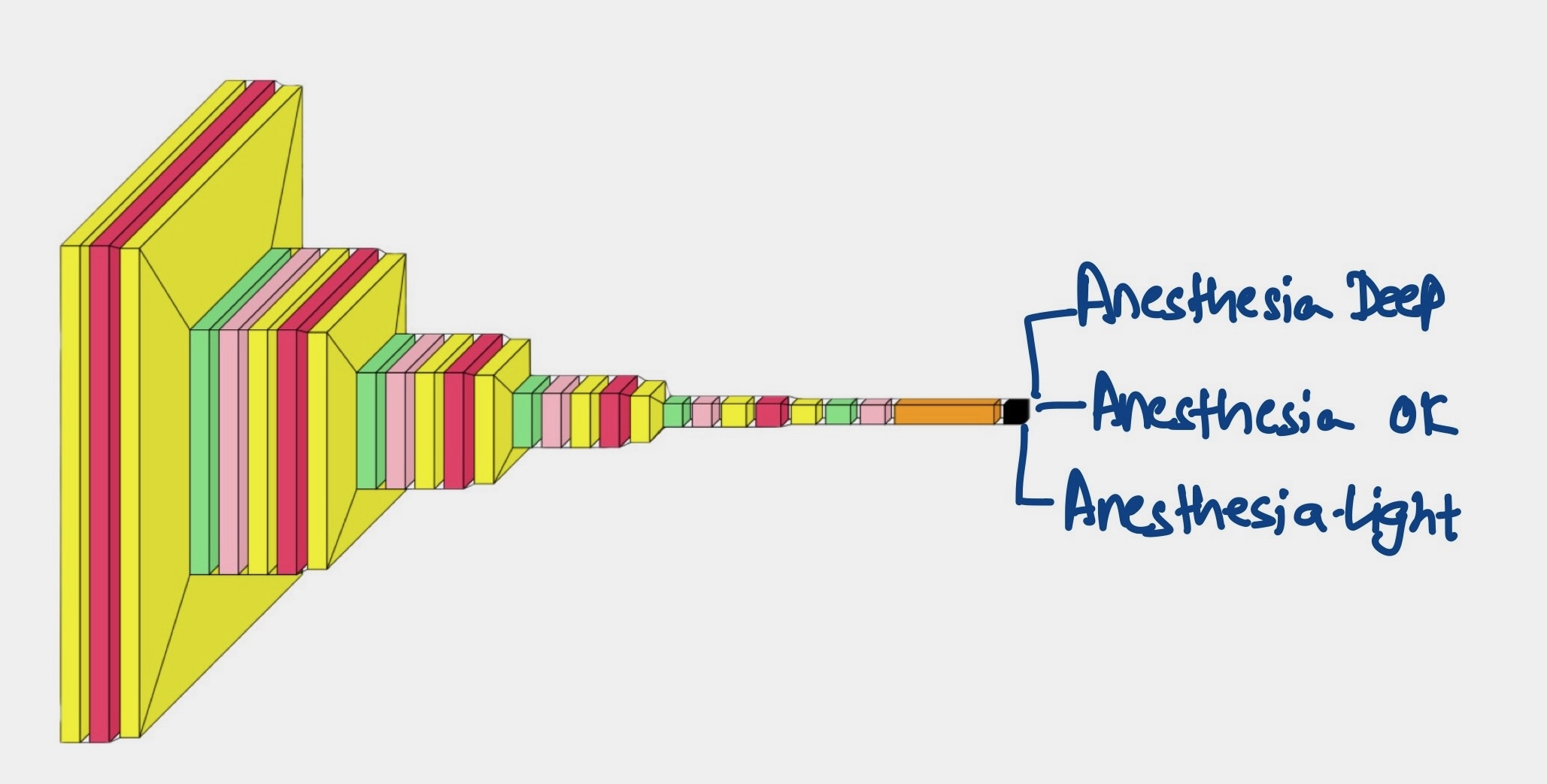
Predicting surgical anesthesia depth using Deep Learning on ECG and PPG signals. Achieved 82% accuracy. Published in BSPC journal.
The ones I'm most proud of — for the full collection, see Google Scholar.
Chowdhury, M. R., Ding, Y., & Sen, S. (2025). ‘SSL-SE-EEG: A Framework for Robust Learning from Unlabeled EEG Data with Self-Supervised Learning and Squeeze-Excitation Networks’. IEEE EMBC. (Link)
Chowdhury, M. R., Xuan, W., Sen, S., Zhao, Y. & Ding, Y. (2025). ‘Predicting and Understanding College Student Mental Health with Interpretable Machine Learning’. IEEE/ACM CHASE. (Link)
Chowdhury, M. R., Ding, Y., & Sen, S. (2025). ‘MyoText: Hierarchical sEMG-to-Text Decoding via Finger-Intent Modeling’. Under Review. (Link)
Xuan, W., Chowdhury, M. R., Ding, Y., & Zhao, Y. (2025). ‘Unlocking Mental Health: Exploring College Students’ Well-being through Smartphone Behaviors’. IEEE/ACM MOBILESoft. (Link)
Chowdhury, M. R., Madanu, R., Abbod, M. F., Fan, S. Z., & Shieh, J. S. (2021). ‘Deep learning via ECG and PPG signals for prediction of depth of anesthesia’. Biomedical Signal Processing and Control, 68. (Link)
Chowdhury, M. R., & Sen, S. (2025). ‘Measurement and Analysis of System Parameter Effects on Noise in EEG Systems’. IEEE ISCAS. (Link)
Chowdhury, M. R., Ghosh, A., Bari, M. F., & Sen, S. (2024). ‘Leveraging Ultra-Low-Power Wearables Using Distributed Neural Networks’. IEEE BSN. (Link)
Chowdhury, M. R., Li, M., Ghosh, A., Bari, M. F., & Sen, S. (2025). ‘Design-Space Exploration of Distributed Neural Networks in Low-Power Wearable Nodes’. Under Review. (Link)
Bari, M. F., Chowdhury, M. R., & Sen, S. (2025). ‘A Computational Harmonic Detection Algorithm to Detect Data Leakage through EM Emanation’. IEEE Internet of Things Journal. (Link)
Bari, M. F., Chowdhury, M. R., & Sen, S. (2023). ‘Long Range Detection of Emanation from HDMI Cables Using CNN and Transfer Learning’. DATE 2023. (Link)
Bari, M. F., Chowdhury, M. R., & Sen, S. (2023). ‘Is Broken Cable Breaking Your Security?’. IEEE ISCAS 2023. (Link)
Bari, M. F., Chowdhury, M. R., Chatterjee, B., & Sen, S. (2022). ‘Detection of Rogue Devices using Unintended Near and Far-field Emanations with Spectral and Temporal Signatures’. IEEE IMS 2022. (Link)
Bangalore, Mumbai, Vellore, and now West Lafayette. Hover over each for details!

Ebenezer International School
Bangalore, India
Score: 96%

Jaipuriar School
Mumbai, India
Score: 92%

VIT Vellore
Vellore, India
CGPA: 9.24 / 10.0

Purdue University
West Lafayette, IN
In Progress
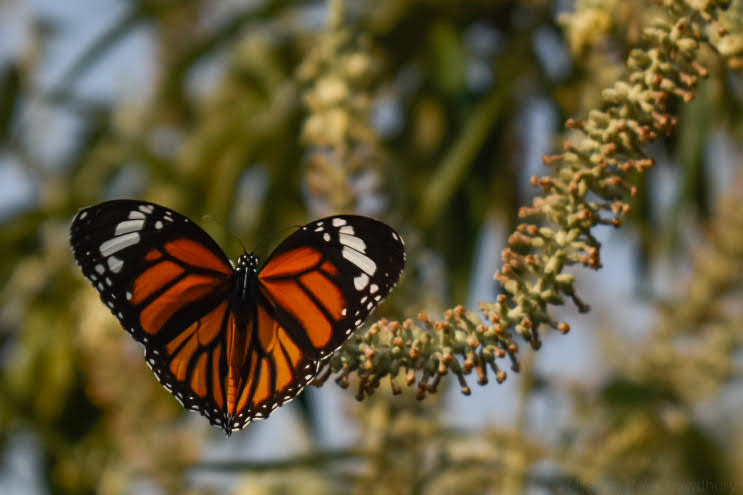
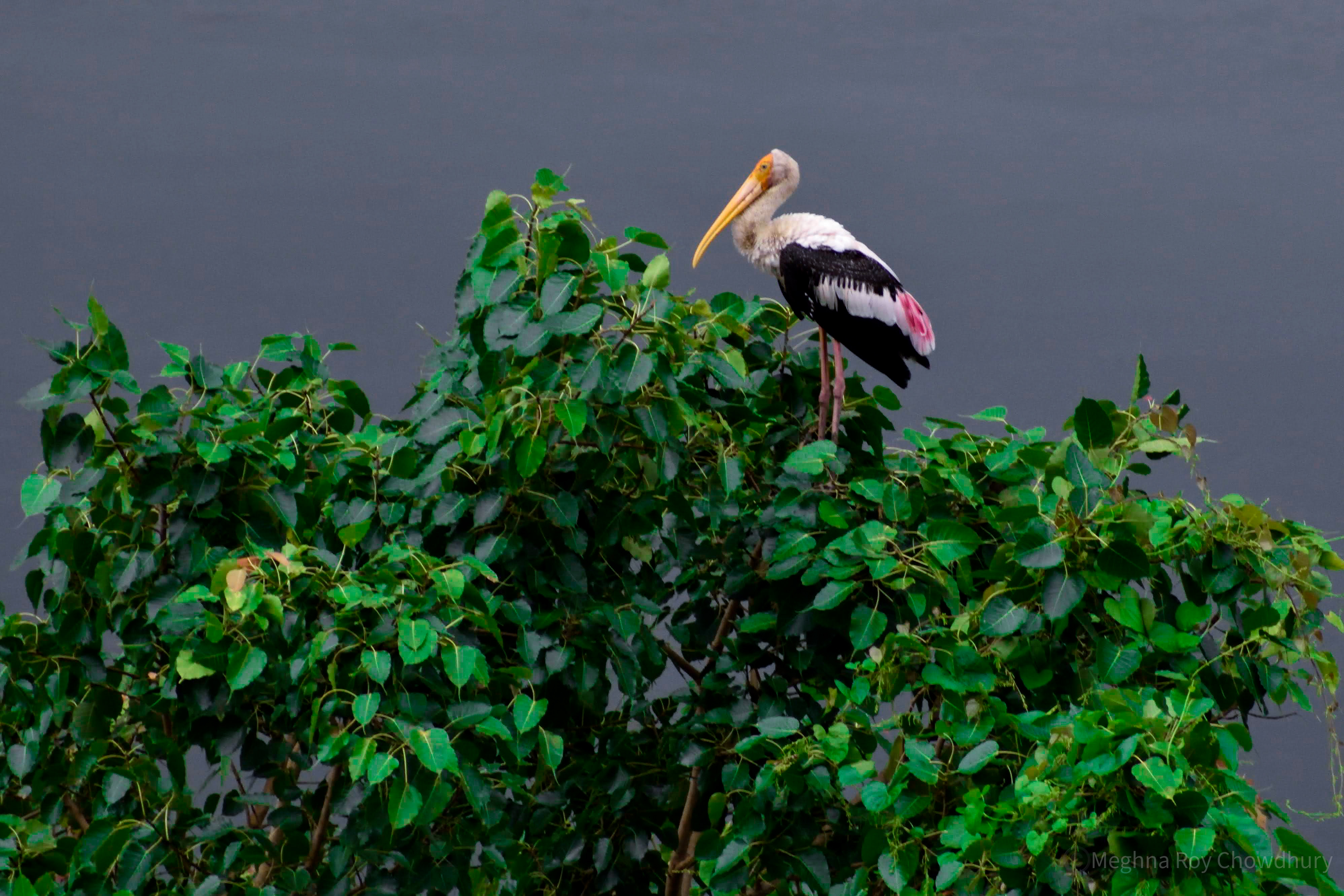
Fun things I do outside the lab Click a category to explore!




If you read this far, we should probably talk.
Have a question, a collaboration idea in low-power technology or health AI, or just want to chat about research (or photography)? Drop me a note.
Want to have a quick chat?
Schedule a 30-min Call